


IL MISTERO DEI CAVALLI 'SACRI' DI CHERNOBYL: LA PRESENZA UMANA PEGGIO DELLE RADIAZIONI!
- Olena Cattani

- 26 apr 2021
- Tempo di lettura: 4 min
THE MYSTERY OF THE 'SACRED' HORSES OF CHERNOBYL: THE HUMAN PRESENCE WORSE THAN RADIATIONS!
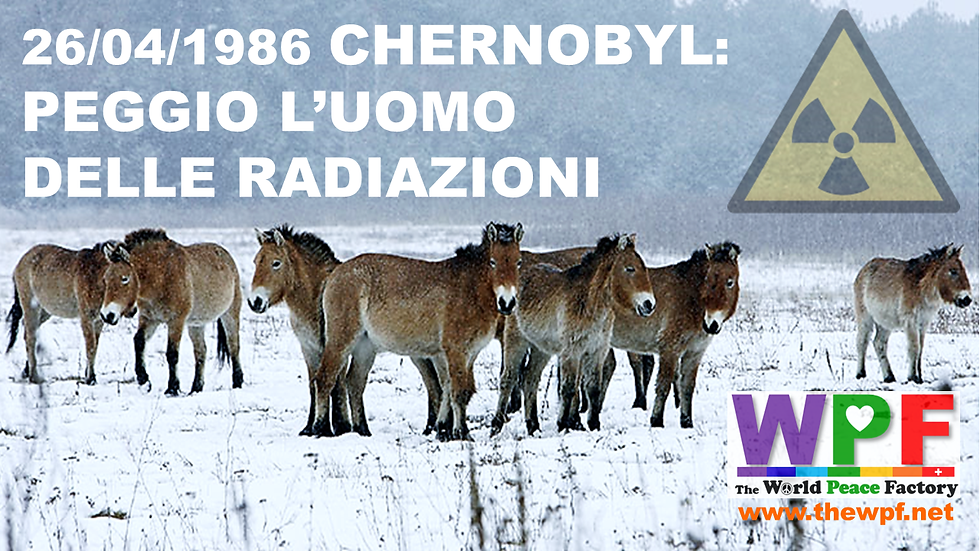
L'esistenza di cavalli selvaggi nelle steppe dell’Asia era nota in Occidente dal XV° secolo ma vennero descritti solo nel 1881 ad opera del colonnello russo Nikolai Przewalski. fu così che quei cavalli conosciuti come takhi (“sacri”) in Mongolia, furono scientificamente ribattezzati cavalli di Przewalski.
Per molto tempo vennero considerati gli unici cavalli selvaggi originari del mondo ma successivamente venne dimostrato che discendevano dai primi cavalli addomesticati 5.500 anni fa dal popolo Botai nel nord del Kazakistan.
Già nel XIX* secolo questi cavalli selvaggi erano rari nelle steppe della Mongolia e della Cina. L’ultimo esemplare in natura era stato osservato nel deserto del Gobi nel 1969.
Esattamente 34 anni fa, il 26 Aprile 1986, ci fu il terribile incidente presso la centrale nucleare ucraina dei Chernobyl. Le conseguenze del disastro nucleare furono catastrofiche e 350.000 persone furono evacuate per le radiazioni. Le autorità istituirono una zona di esclusione di 4700 kmq tra Ucraina e Bielorussia: quell'area sarebbe rimasta secondo gli scienziati ed i fisici nucleari del tutto inabitabile per oltre 20.000 anni, trasformandosi in un “deserto” dove la vita non sarebbe stata più possibile. Tre decenni dopo il disastro, a Chernobyl vive una comunità animale diversificata e ricca. Di fatto, un gran numero di specie minacciate a livello nazionale ed europeo ha trovato rifugio nella zona di esclusione, in cui l’uomo non può accedere.
Ma sono proprio i cavalli selvaggi di Przewalski a incuriosire gli scienziati e biologi: la loro numerosa presenza nella zona di esclusione che circonda la centrale nucleare di Chernobyl è un vero e proprio mistero: "Come hanno fatto a sopravvivere in un'area radioattiva per decenni?"
Ancora una volta sembra che, in assenza dell’uomo, Chernobyl è diventata un “paradiso” per la fauna selvatica.: l’impatto della presenza umana sugli ecosistemi naturali sembra peggiore della radioattività elevata e diffusa.
E' un evidente dato di fatto che in assenza di attività umana, benché in presenza di contaminazione radioattiva, la fauna e la flora prosperano.
A soli 20 anni dal suo arrivo a Chernobyl il numero di cavalli selvaggi di Przewalski si è moltiplicato per cinque. Il censimento più recente, condotto da scienziati locali nel 2018, ha rivelato che circa 150 animali vivono nella parte ucraina della zona di esclusione. Le telecamere installate in tutta la zona di esclusione hanno dimostrato che, nonostante siano una specie associata alle steppe, a Chernobyl questi cavalli usano la "foresta rossa" con grande frequenza. una delle aree più radioattive del pianeta.
In ogni caso, dobbiamo comprendere meglio i meccanismi che consentono alla fauna di vivere in aree con contaminazione radioattiva.
Sono ancora molte le domande senza risposta.
Gli organismi viventi di Chernobyl sono esposti a meno radiazioni del previsto? Quest’esposizione provoca meno danni?
Oppure gli organismi di Chernobyl hanno meccanismi più efficaci del previsto per riparare i danni cellulari causati dalle radiazioni?
THE MYSTERY OF THE 'SACRED' HORSES OF CHERNOBYL: THE HUMAN PRESENCE WORSE THAN RADIATIONS!
The existence of wild horses in the steppes of Asia was known in the West from the 15th century but were only described in 1881 by the Russian colonel Nikolai Przewalski. so it was that those horses known as takhi ("sacred") in Mongolia, were scientifically renamed Przewalski's horses.
For a long time they were considered the only wild horses native to the world but were later shown to be descended from the first horses domesticated 5,500 years ago by the Botai people in northern Kazakhstan.
As early as the 19th century, these wild horses were rare in the steppes of Mongolia and China. The last specimen in the wild was observed in the Gobi desert in 1969.
Exactly 34 years ago, on April 26, 1986, there was the terrible accident at the Ukrainian Chernobyl nuclear power plant. The consequences of the nuclear disaster were catastrophic and 350,000 people were evacuated for radiation. The authorities established an exclusion zone of 4,700 sq km between Ukraine and Belarus: according to nuclear scientists and physicists, that area remained completely uninhabitable for over 20,000 years, turning into a "desert" where life would no longer be possible. Three decades after the disaster, a diverse and rich animal community lives in Chernobyl. In fact, a large number of threatened species at national and European level have found refuge in the exclusion zone, which humans cannot access.
But it is Przewalski's wild horses that intrigue scientists and biologists: their large presence in the exclusion zone surrounding the Chernobyl nuclear power plant is a real mystery: "How did they survive in a radioactive area for decades. ? "
Once again it seems that, in the absence of man, Chernobyl has become a "paradise" for wildlife: the impact of human presence on natural ecosystems seems worse than high and widespread radioactivity.
It is a clear fact that in the absence of human activity, albeit in the presence of radioactive contamination, the fauna and flora thrive.
Just 20 years after his arrival in Chernobyl, the number of Przewalski's wild horses has multiplied by five. The most recent census, conducted by local scientists in 2018, revealed that around 150 animals live in the Ukrainian part of the exclusion zone. The cameras installed throughout the exclusion zone have shown that, despite being a species associated with the steppes, these horses use the "red forest" with great frequency in Chernobyl. one of the most radioactive areas on the planet.
In any case, we need to better understand the mechanisms that allow fauna to live in areas with radioactive contamination.
There are still many unanswered questions.
Are living organisms in Chernobyl exposed to less radiation than expected? Does this exposure cause less damage?
Or do the Chernobyl organisms have more effective mechanisms than expected to repair cellular damage caused by radiation?


Commenti